2026-06-09
Turning Innovation Sparks into Practical Digital Solutions: The Multiplier Effect of an Innovation Contest
Source:Fujian Daily
Turning Innovation Sparks into Practical Digital Solutions: The Multiplier Effect of an Innovation Contest
The Digital China Innovation Contest is a flagship event of the Digital China Summit. Launched in 2019, it has developed over the past seven years into a proven model that attracts talent, promotes practical applications, nurtures future innovators, and drives industry development. It has become a key platform for society-wide participation in advancing Digital China.
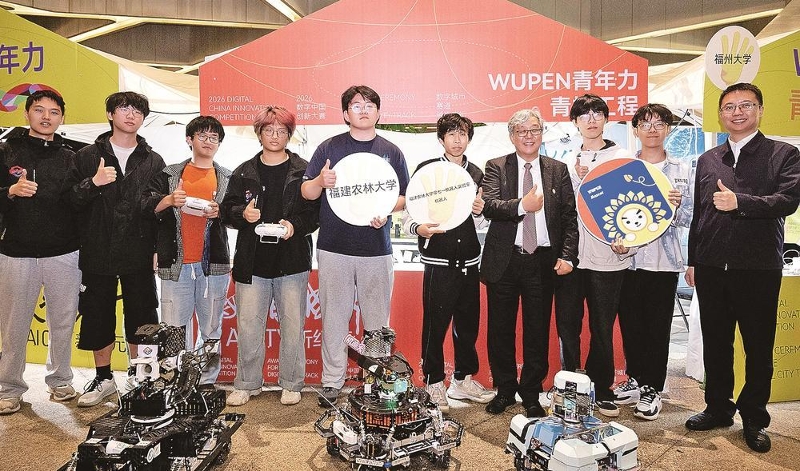
At the “Digital City Night” event during the 9th Digital China Summit, multiple university teams presented their scientific and technological achievements.
What’s behind the success of the contest?
On the scale front, the contest has drawn over 160,000 participants, with more than 3,300 teams receiving awards — a remarkable feat among similar competitions across the country.
In terms of results, a series of innovations has moved from the competition to real-world applications. Notable examples include AI-powered diagnostic technology for liver cancer imaging applied in Mengchao Hepatobiliary Hospital, as well as fintech solutions rolled out across more than 20 parks in Fuzhou.
Regarding ecosystem development, 21 high-quality participating companies have established a presence in Fuzhou. The Information Technology Application Innovation (ITAI) track alone has provided training for over 2,000 enterprises and cultivated more than 20,000 developers.
The key to these achievements lies not in how impressive the digital technology appears, but in how effectively it addresses real-world needs.
Recently, our reporters took a closer look inside and outside the contest, interviewing participants, judges, and organizers to explore the broader multiplier effect generated by the event.
Rapid Deployment of an AI Project
On April 29, the awards ceremony for the AI track of the Digital China Innovation Contest 2026 was held at the Fuzhou Strait International Conference and Exhibition Center. When the host announced “SUPIEDT Fuzhou,” the company’s Chief Operating Officer, Li Zhenyu, rose to his feet.
Just a day earlier, his team had completed their roadshow presentation. Behind the scenes, the investment judges were inquiring about the company in their group chat. Li Zhenyu knew that this first-place award meant far more than just a trophy.
“We are an AI-native team,” Li Zhenyu said with calm confidence. More than 80% of the company’s employees are R&D personnel, and its core team members graduated from QS World Top 10 universities and China’s C9 League universities. What truly impressed the judges, however, was the speed at which their competition entry had been developed.
“Two developers wrote 1.3 million lines of code in merely two weeks,” Li Zhenyu said.
It is virtually unprecedented in software development. Driving this rapid delivery was the team’s proficient use of AI tools. “We are heavy users of AI ourselves,” Li Zhenyu explained. “We leverage AI agents to assist in development, testing, and bug fixes, boosting work efficiency and realizing a shift from conventional project delivery to daily automated content generation.”
Speed was not the only . The “AI Judge Assistant” tackles a common challenge in the industry: judging in large competitions is often highly subjective, standards are difficult to unify, and the workload is enormous. While most AI judging tools address only isolated problems, SUPIEDT’s system covers the full lifecycle of contest evaluation, from submission and automatic pre-screening to AI-suggested scores, multi-round human review, ranking publication, and audit traceability.
“AI suggestions serve as a reference, and human scores can be verified, with all operations fully recorded and traceable,” said Li Zhenyu. “AI functions as a ‘super assistant’ for judges, not a replacement.”
To demonstrate how the system ensures fairness, the technical leader showed a judging scenario: when reviewing a submission, the system displays a preview of the work, the scoring panel, AI-suggested scores, and historical review records, along with duplication reports. “If a judge’s score differs greatly from the AI-suggested score, the system prompts a recheck. All operations are fully traceable and auditable,” he explained.
According to Zheng Jing, press officer for the AI track, SUPIEDT’s rise was no accident. “This year, 997 teams registered for the AI track, submitting 534 entries, and 93 teams made it to the finals,” she said. “Judges prioritize technology that genuinely solves real-world problems.”
After winning the award, Li Zhenyu received numerous collaboration inquiries. “For large-scale competition judging, internal company project evaluations, or academic paper reviews, our platform can complete demand alignment and deployment within two to three days,” he said. Today, SUPIEDT, a company that started in Kunming, has established operations in Fuzhou New Area, emerging as a rising force in the local digital industry cluster.
SUPIEDT’s success is not an isolated case. In the 2025 AI track, the “Urban Governance Agent” project by the Metabrain AGI team won third place in the enterprise category. According to project leader He Gang, by participating in the contest, they not only gained access to computing resources from the Fujian AI Computing Center, but also established direct connections with real-world applications such as smart cities and emergency rescue. Their R&D results are now helping reduce fieldwork for power inspections and improve precision in urban management, “turning the industrialization of multimodal large models into reality.”
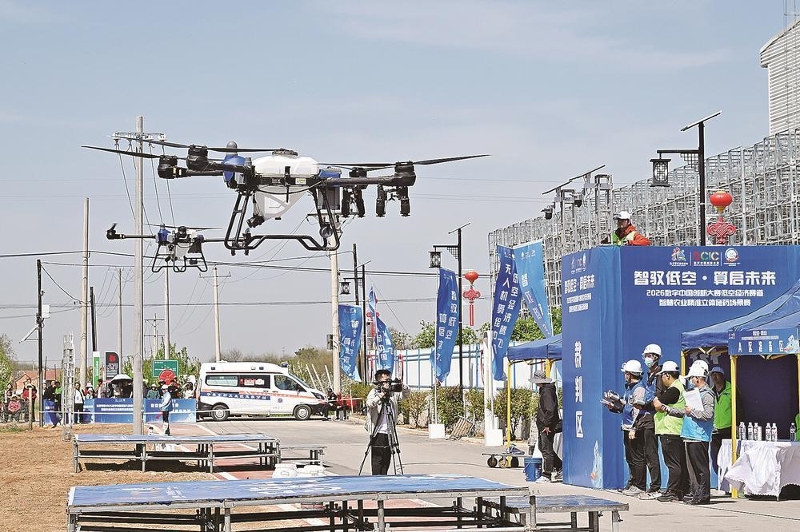
Digital China Innovation Contest 2026 – Low-Altitude Economy Track: Scenario-Based Challenge
China Unicom Qingdao’s Smart Low-Altitude Project is another example of innovation driven through competition. Project leader Chen Zhanwen noted that by taking part in the competition, they clarified common requirements for low-altitude flight data sharing and established a unified platform enabling “one-time collection, multi-party reuse.” Following the award, the project gained local policy support and access to open application scenarios, while also drawing proactive collaboration from Fujian-based companies in the drone manufacturing, 5G communications, and related sectors.
On Fuzhou’s appeal to AI startups, Li Zhenyu offered a vivid summary: “It combines national-level platforms that foster industrial clustering with a cost-friendly operating environment and favorable business atmosphere for startup growth.”
Using AI to Solve Real-World Problems
If “rapid delivery” represents efficiency, the exploration by the Information and Communications Branch of State Grid Fujian Electric Power Co., Ltd. s another dimension of AI—caring for people’s livelihoods.
Xie Luyi recalled that when the team first received the task, the goal was simple: “Simplify electricity bills for residents and cut power costs for enterprises.” She is a junior analyst in the company’s Smart Services Division and a core member of the “Smart Advisor for Public Electricity Services” project.
In Fujian, massive amounts of data, including full records of low- and high-voltage users, billing data, policy documents, and external weather information, were scattered in different systems. Traditional bill verification relied on manual experience and was inefficient. Leveraging the company’s self-developed Guangming Power Large Model and domestic computing power, the team built an intelligent system for public livelihood services that integrates smart billing, electricity demand forecasting, and population mobility prediction.
The results are tangible. According to Xie Luyi, intelligent electricity billing now delivers 99% of low-voltage residential bills within one day, while bill interpretation services run 90% more efficiently. Industrial and commercial electricity costs have dropped by 3–5%, and electricity consumption forecasts achieve accuracy above 98%, enabling precise alerts for potential power shortages during peak summer periods.
“In Fujian, we’ve achieved industry-level power load forecasting, ranging from annual to minute-level prediction,” Xie Luyi said. “We can predict electricity usage and, by analyzing overall consumption trends, assess market structure changes and growth potential, providing data support for government decision-making.”
The project won first prize in the “AI + Consumer Services and Livelihoods” challenge of the AI track at the Digital China Innovation Contest 2026. More importantly, it has already been implemented in Fujian’s power system.
State Grid Fujian Electric Power Co., Ltd. has been actively participating in the Digital China Innovation Contest for several years. Wu Qian, who is responsible for organizing the Energy Big Data Innovation Application challenge of the Data Application track, explained the company’s original intention: “Electricity service is one of the most basic public utilities. In the past, we focused on whether electricity was available; now we want to ensure it is used efficiently. AI allows us to shift from reactive responses to proactive service.”
The project’s rollout was not without challenges. The team distilled business experts’ judgment experience into a structured billing anomaly detection logic, enabling staff to verify electricity bills more efficiently.
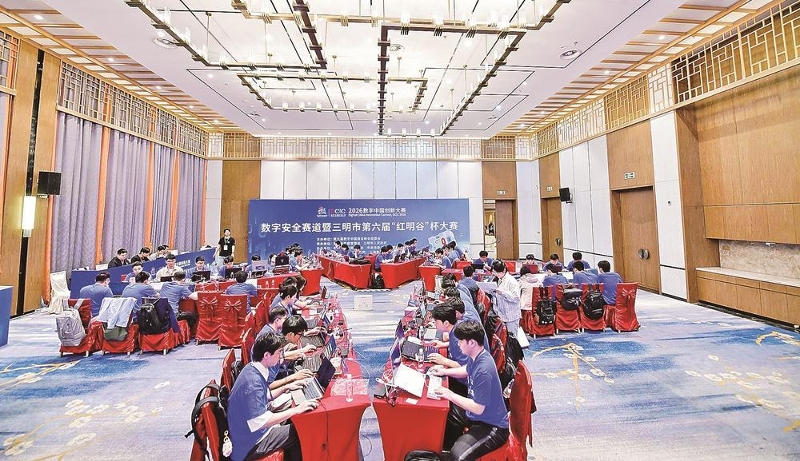
Digital China Innovation Contest 2026 – Digital Security Track: Public Data Attack & Defense Challenge
At the judging panel of the Digital China Innovation Contest 2026, Zhang Lei paid particular attention to projects that tackle difficult, “hard-to-crack” problems. As former general manager of the Information and Communications Branch of State Grid Hebei Electric Power Co., Ltd. and a member of the Information and Communications Committee of the China Energy Research Society, Zhang Lei participated in the evaluation of the “Digital Innovation Application and Practice for New-Type Power Systems” challenge.
“The ‘Digital Sentinel’ team left a deep impression on me,” Zhang Lei said in an interview after the competition. “They addressed the safety supervision of unscheduled operations. In the past, this relied on manual patrols and experience-based monitoring, which had limited coverage. The biggest challenge was not the algorithm, but the data—equipment was coded differently across different systems. Instead of avoiding this issue, the team pushed for unified data standards from the top down. They built a solid data foundation first and then developed the model, eventually achieving 92% detection accuracy.” In Zhang Lei’s view, the more important shift was the move from “passive random inspections” to “proactive scanning.”
During the judging process, Zhang Lei also noticed a “non-technical” . “One team focused on vehicle-charging pile-grid coordinated regulation. It was highly technical, but instead of starting from system architecture, they took electricity bills as the entry point. For example, they explained when and under what load conditions an industrial park should participate in demand response, and how the economic benefits would be calculated,” she said. “No matter how advanced the technology is, if users cannot understand the value, they will not adopt it. Treating ‘technical feasibility’ and ‘business feasibility’ as equally important is an approach worth noting in technology-for-public-service challenge evaluations.”
Co-Building an Industry Ecosystem
While the AI track focuses on efficiency and people’s livelihoods, the ITAI track addresses a deeper issue: the development of a self-reliant industrial ecosystem.
In April 2021, at the final of the Kunpeng Computing track of the Digital China Innovation Contest in Fuzhou, Tian Yaru, Vice President of YeeHeart Inc., took the stage as “PhotoSir” appeared on the screen behind her.
At the time, China’s professional image processing software market was almost a blank slate. Adobe Photoshop dominated globally, while domestic alternatives were either too limited in function or remained at the stage of being usable but not truly user-friendly. The goal of “PhotoSir” was clear: to develop a fully domestically developed, end-to-end professional image processing software suite.
The judges evaluated the project from multiple dimensions, including technological independence, ecosystem compatibility, and market potential. Ultimately, “PhotoSir” stood out among more than 500 entries and won first prize.
“Winning the championship was a turning point for us,” Tian Yaru recalled. “The contest provided us a platform to showcase our work, and more importantly, it helped the industry recognize the potential of domestic image processing software.” Since then, “PhotoSir” has gone on to win second prize in the ITAI track at the Digital China Innovation Contest 2023 and the championship of the 12th Cross-Strait Information Service Innovation Competition. It has also passed Huawei Kunpeng ecosystem certification, becoming a benchmark product in the ITAI sector.
Ye Weihua, chairman of the ITAI track organizing committee of the Digital China Innovation Contest and president of the Fujian Open Source Digital Technology Research Institute, has witnessed the track’s evolution. “Since its launch in 2019, the ITAI track has grown over seven years, covering 12 cities, hosting more than 100 events, engaging over 2,000 enterprises, and training more than 20,000 developers,” he said. “Today, the ITAI track has grown into the leading professional competition in China’s ITAI sector, with the longest history, broadest reach, and strongest ecosystem impact.”
In 2026, the ITAI track introduced a new framework of “industry-specific/special competitions + national finals.” The track features seven industry competitions, covering sectors such as energy, transportation, finance, water resources, education, and healthcare, along with a special competition for OpenAtom PowerHarmony. A total of 848 organizations participated, submitting 690 entries and involving 6,503 participants—all marking record highs.
This ecosystem effect is clearly demonstrated in the cooperation between YeeHeart and Fujian-based companies.

Emerging from the Innovation Contest, YeeHeart has partnered with LUMINA PEONY to explore opportunities in the cultural and creative industries. The photo shows students from the Affiliated Primary School of Quanzhou Normal University presenting works created in the LUMINA PEONY art class.
In 2024, LUMINA PEONY Digital Technology Co., Ltd. (hereinafter “LUMINA PEONY”), a company based in the Quanzhou Economic and Technological Development Zone, established a partnership with YeeHeart. LUMINA PEONY is a high-tech enterprise specializing in digital inkjet printing equipment and environmentally friendly inks, with core technologies enabling photo-quality printing on products such as footwear, apparel, ceramics, and luggage.
“‘PhotoSir’ provides us with fully domestically developed design tools,” said Cai Xinchen, deputy director of Science and Education at LUMINA PEONY. “Its AI capabilities have significantly improved image design efficiency. Tasks that once took professional designers several hours can now be completed by operators in just over ten minutes.”
The cooperation extends far beyond technology. The two companies have joined forces in the cultural tourism and education sectors. As Quanzhou’s cultural and tourism sector continues to boom, LUMINA PEONY has been deeply involved in the design and production of cultural and creative merchandise featuring the Quanzhou team mascot for the Fujian Football City League (MinChao). During the recent Children’s Day holiday, they also produced customized bookmarks, pencil cases, tote bags, and puzzles for children at Quanzhou Chuanchun Kindergarten. “Nothing could match the excitement the children felt when they saw their own designs brought to life on the cultural and creative products,” Cai Xinchen said.
Beyond “PhotoSir,” a growing number of companies have emerged from the ITAI track. According to Ye Weihua, 21 high-quality participating enterprises, including Qingchuang Cyber Security, Sichuan Xunteng, and Xuheng Metadata, have established subsidiaries in Fuzhou. The competition has also facilitated the implementation of the Collaborative Innovation and Experience Promotion Center, a national key ITAI project with a total investment of RMB 130 million, further strengthening the regional industrial layout. In 2022, projects from teams such as CTFF Information Technology Co., Ltd. and Yirong Information attracted attention from the OpenAtom Foundation. In September of the same year, six companies and two universities from Fuzhou and Xiamen jointly established China’s first provincial-level open-source research institute—the Fujian Open Source Digital Technology Research Institute—promoting the deep integration of open-source technologies with the ITAI industry.
Ye Weihua noted, “The competition is more than a venue for showcasing innovation; it is also an important platform for companies to access resources, build partnerships, and expand their market reach. A successful ITAI product can drive growth across the entire business line, enabling a transformation that integrates ITAI, operations, and services.”
From single-point technological breakthroughs to collaboration across the industry chain, and ultimately to the development of a regional industrial ecosystem, the Digital China Innovation Contest has, over the past seven years, achieved far more than impressive participation numbers. It has cultivated a self-sustaining “forest” of industrial innovation.
Source: Fujian Daily
(All photos used in this article are provided by the interviewees.)