2026-06-02
Humanoid Robots Are Getting ID Codes ― What Does the 29-digit Code Mean?
Source:Guangming Daily
If you encounter a robot on the street, you can scan its “ID card” with your phone to instantly view details such as the manufacturer, model, and production date.
Recently, the Beijing Economic-Technological Development Area officially launched the “Full Lifecycle Management Service Platform for Humanoid Robots,” along with the release of the Standards for the Full Lifecycle Management of Humanoid Robots. At the core of the Standards is a requirement that every humanoid robot be assigned a 29-digit “identity code,” ensuring end-to-end traceability throughout its lifecycle, from “birth” to “retirement.”
In other words, humanoid robots will have their own “ID cards,” issued under a unified national standard.
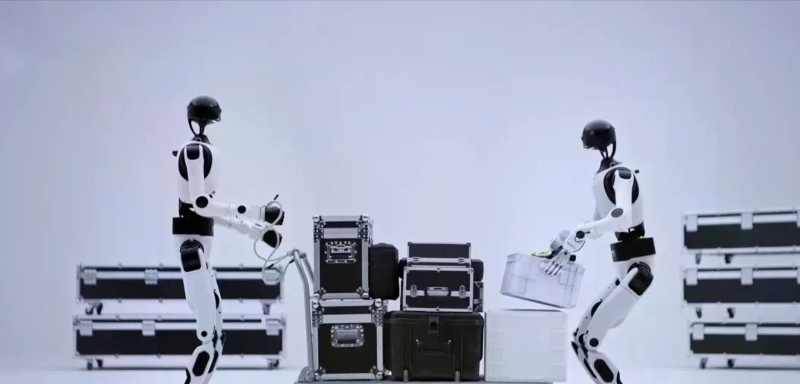
So, what’s behind the 29-digit code?
This code is far from arbitrary. Yu Xiuming, Deputy Director of the China Electronics Standardization Institute, explained that, like a personal ID number, each segment of the 29-digit code carries a specific meaning.
Specifically, the 29-digit code is divided into four parts:
The first 2 digits: country code – indicates the place of origin, making cross-border traceability and overseas shipments easier.
The next 4 digits: manufacturer code – uniquely identifies the manufacturer, so if any issues arise, it’s immediately clear who is responsible.
The following 6 digits: product model code – reflects the model and technical specifications, revealing when the robot was produced and its capability level.
The last 17 digits: serial number – uniquely identifies an individual robot of the same model, allowing precise, end-to-end traceability from production to recycling.
Clearly, assigning such a code to robots is tantamount to giving them a “social identity.” No matter which industry or role they enter, they can always be identified and managed.
So why has the standard been introduced now?
Let’s start with some data: In 2025, China accounted for over 90% of global humanoid robot shipments, with its leading companies firmly holding the top spot worldwide.
Meanwhile, China’s humanoid robots are shifting from a “kung fu mode” (performance demonstrations) to a “working mode” (real-world tasks).
Humanoid robots can now be seen on streets, in factories, shopping malls, hospitals, and even just outside your home. In March, one in Macau reportedly startled passersby and was subsequently taken away by police.
As humanoid robots become more prevalent, new challenges are emerging. Different companies rely on their own proprietary coding systems, which means a robot developed by one manufacturer may not even be able to recognize or operate in another company’s environment. Additionally, as robots become an increasingly common presence in public spaces, ensuring safety and security will become an ever-greater challenge.
That is exactly the challenge this digital ID system is designed to address. It is far more than just an idea. According to Liang Liang, Vice Chair and Secretary-General of the Technical Committee for Standardization of Humanoid Robotics and Embodied Intelligence, Ministry of Industry and Information Technology, as well as Deputy Secretary-General of the Chinese Institute of Electronics, the ID platform has covered more than 100 Chinese humanoid robotics companies. To date, it has issued unique identifiers for over 200 product models and more than 28,000 robots.
Member cities of the “20 AI Cities” work mechanism, including Beijing, Wuhan, Chengdu, and Ningbo, along with more than 30 leading humanoid robotics companies, formally signed agreements to join the initiative.
Although only group standards have been introduced so far, mandatory national standards and industry standards are already being developed in parallel.
Xie Shaofeng, Chair of the Technical Committee for Standardization of Humanoid Robotics and Embodied Intelligence, Ministry of Industry and Information Technology, made an important point: “Building on the launch of the full lifecycle management service platform for humanoid robots, we will work together to create a safe, controllable, innovation-driven, and self-sustaining ecosystem for the humanoid robotics industry.”
Next, training will be provided for manufacturers and service providers to ensure they can understand the standards, put them into practice, and comply with the relevant requirements.
At the same time, efforts will be made to accelerate the development of standards related to digital identity, including identity recognition, product certification, and electronic geofencing.
It is foreseeable that, as humanoid robots become increasingly widespread, ensuring their safety and reliability through an “identity code” will become increasingly important.